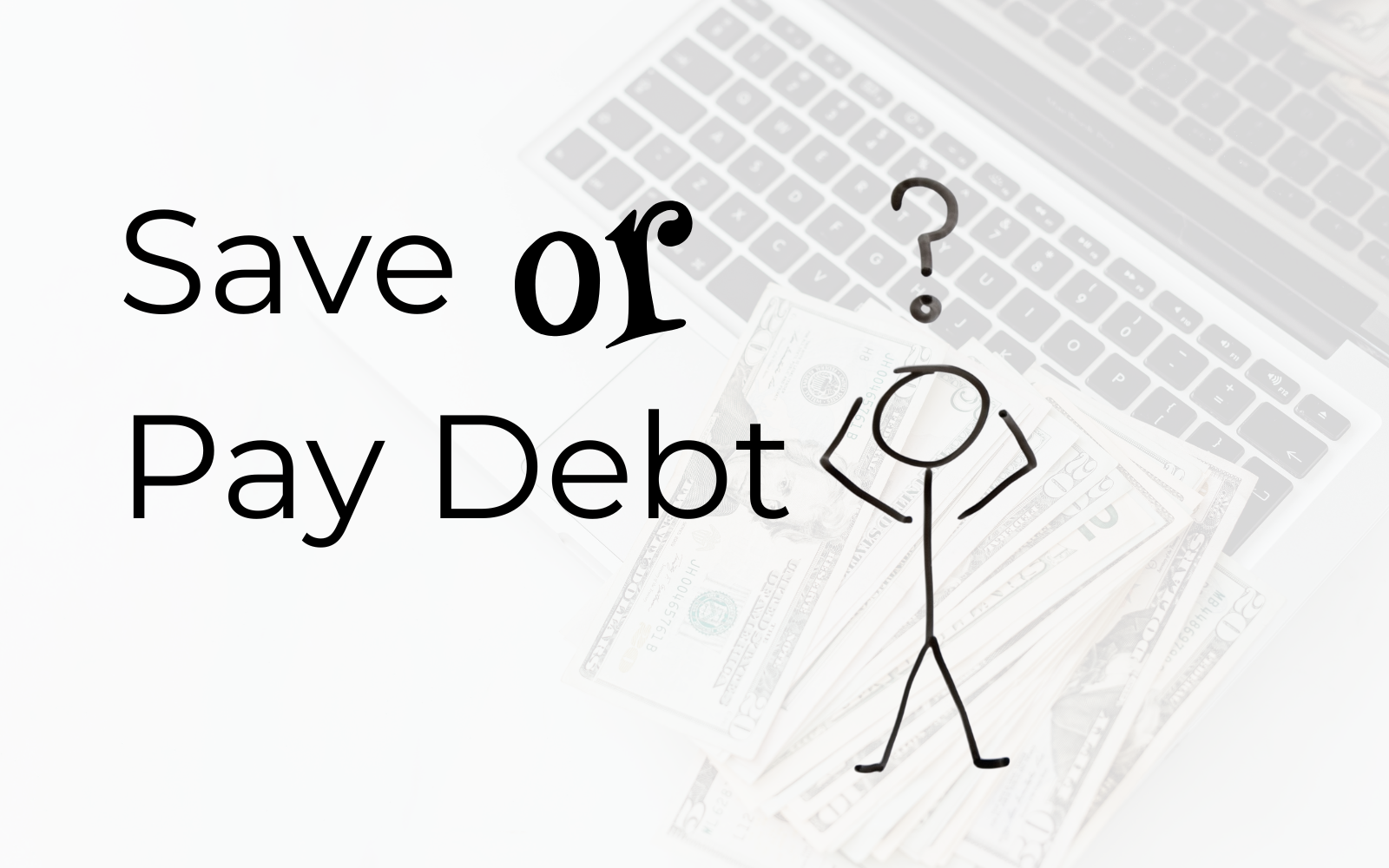
This is one of the most stressful money questions because it feels like there should be a single right answer.
Save first.
Pay debt first.
Do both.
Do neither.
The truth is simpler — and much calmer — than most advice makes it.
The Real Answer: It Depends On The Type Of Debt
Not all debt should be treated the same.
The decision to save or pay off debt first depends on interest rates, stability, and risk — not guilt or urgency.
Step One: Always Build A Small Safety Net
Before aggressively paying off debt, you should have some savings.
Even if you have debt, you still need:
- Protection from emergencies
- A buffer so you don’t rely on credit
- Financial breathing room
A small starter goal is $1,000 or one month of essential expenses — whichever feels more realistic.
This money should live in a High-Yield Savings Account (HYSA) so it stays accessible and earns interest.
→ Best Beginner High-Yield Savings Account
Step Two: Look At The Interest Rate On Your Debt
Once you have a small safety net, interest rates decide the next move.
High-Interest Debt (Usually 6–7% Or Higher)
Examples:
- Credit cards
- Personal loans
- High-interest car loans
For this kind of debt:
- Prioritize paying it down
- Continue saving small amounts
- Focus extra money on the debt
High interest works against you every month.
Low-Interest Debt (Usually Below 5%)
Examples:
- Student loans
- Mortgages
- Some car loans
For this kind of debt:
- Keep making required payments
- Continue building your emergency fund
- Do not panic-pay it off
Low-interest debt is usually not an emergency.
Why You Should Not Choose One Extreme
Saving nothing while paying off debt leaves you vulnerable.
Paying off debt with no savings creates stress and backtracking.
A balanced approach works better:
- Small, consistent savings
- Strategic debt payoff
- Calm decision-making
Progress does not need to be dramatic to be effective.
What This Looks Like In Practice
A simple, realistic flow:
- Build a small emergency buffer
- Pay minimums on all debt
- Attack high-interest debt
- Grow savings toward 3–6 months of expenses
- Re-evaluate once stability improves
No rushing. No panic. No shame.
The Takeaway
You do not need to choose saving or debt repayment.
You need:
- A safety net
- A plan based on interest rates
- Consistency over intensity
Money decisions get easier when you remove emotion and follow structure.
That is money without noise.