Most people do not struggle with saving because they lack discipline.
They struggle because they lack structure.
A savings system removes decision fatigue. It tells your money where to go before emotion gets involved.
Here is the clean, step-by-step version.
Step 1: Open The Right Savings Account
Before you worry about amounts, percentages, or investing — you need the correct container.
Your savings should live in a High-Yield Savings Account (HYSA).
Not a traditional savings account earning almost nothing.
A HYSA:
- Keeps your money accessible
- Earns meaningful interest
- Requires no investing knowledge
- Adds no risk
If you are earning $4,000 per month and keep $10,000 in a traditional savings account at 0.01%, you earn almost nothing.
In a HYSA earning 4–5%? That same $10,000 earns hundreds per year.
Same money.
Different container.
Different outcome.
If you do not have one yet, start here:
→ Best High-Yield Savings Accounts For Beginners
You only need one solid account to begin.
Do not overcomplicate it.
Step 2: Separate Checking From Savings Properly
our savings account is for protection.
When too much money sits in checking:
- Spending increases
- Clarity decreases
- Saving feels optional
When too little sits in checking:
- Bills cause anxiety
- Transfers become constant
- You feel unstable
If you are unsure how much belongs in each, read:
→ How Much Should I Keep In Checking Vs Savings?
The short version:
- Keep one month of expenses (plus a buffer) in checking.
- Everything else moves to savings.
Clarity eliminates friction.
Step 3: Build A Starter Emergency Fund
Before optimizing anything, build a base layer.
Your first target:
- $500–$1,000
or - One month of essential expenses
This creates breathing room and prevents you from using credit for small emergencies.
If you want the full breakdown, read:
→ How Much Should My Emergency Fund Be — And Where Does It Go?
This is the foundation of your system.
Step 4: Decide How To Handle Debt
If you have debt, the next move depends on interest rates.
You do not blindly save.
You do not blindly pay everything off.
Common starter emergencies:
- Car repair
- Medical bill
- Travel for family situation (unexpected death)
- Job disruption
- Appliance replacement
Without a buffer, these become debt.
With a buffer, they become inconveniences.
Read:
→ Is It Better To Save Or Pay Off Debt First?
Structure removes the panic.
Step 5: Grow Toward 3–6 Months Of Expenses
Once the starter emergency fund is in place and high-interest debt is under control, expand your savings to:
Three to six months of essential expenses.
This is where stability becomes real.
Until this layer exists, investing is secondary.
Step 6: Know When To Transition To Investing
If you have debt, your next move depends on interest rates.
You do not blindly save.
You do not blindly pay everything off.
You build a small buffer first.
Then evaluate:
- Credit cards at 20%+? Prioritize payoff.
- Student loans at 4–6%? Balanced approach.
- Low-interest debt below 4%? May not require urgency.
Example:
If you have:
$1,000 emergency fund
$8,000 in credit card debt at 22%
Aggressive payoff is probably the best move.
But if you have:
$1,000 emergency fund
$20,000 student loan at 3.5%
You may continue building savings while paying minimums.
If you are unsure when to switch focus, read:
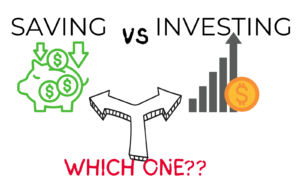
→ Should I Be Investing Or Saving? When Do I Do Each?
Investing only works when stability is already built.
What A Complete Beginner Savings System Looks Like
- High-Yield Savings Account opened.
- Checking stabilized with one month of expenses.
- Starter emergency fund built.
- High-interest debt addressed.
- Savings grown to 3–6 months.
- Investing begins intentionally.
No complicated spreadsheets.
No dramatic overhauls.
Just progression.
The Takeaway
A savings system is not about motivation.
It is about order.
When your money has structure:
- Decisions get easier.
- Stress decreases.
- Growth becomes predictable.
Build stability first.
Layer growth second.
Scale over time.
That is money without noise.